Showing posts with label oral history. Show all posts

Monday, January 18, 2016

Who Died Today?

What do David Bowie, David Margulies, Alan Rickman, Dan Haggerty, and Glenn Frey all have in common?

According to Worldometers, they are among the roughly three million people who have died since this month (and year) began.

Because these people were all celebrities—Ziggy Stardust, the mayor on Ghostbusters, Professor Snape, Grizzly Adams, and a founding member of The Eagles—their deaths were noticed by the masses. And the fact that they all departed within the same seven days of each other has sent Americans into a frenzy of social media sendoffs.

But again, three million more people have passed through the same mortal portal since the Gregorian calendar changed from 2015 to 2016.

While it’s slightly alarming to think the number of deaths in over two weeks is the equivalent of 79% of the entire population of Los Angeles, about seven million people have been born since the month/year began. That’s about 82% of the population of New York City replacing them in the same amount of time.

So what does it mean? It means that while seven million people have begun the exciting but difficult journey of life this month, the stories of three million others have come to an abrupt end, whether expected or unexpected. Whether accidental, intentional, or natural. Whether their stories were written down or not.

A few months ago, I started interviewing a 71-year-old mother/grandmother/farmer about her life’s history. The three interviews I’ve conducted—so far—have each lasted two hours a piece, making over six hours of recording on her life. The single-spaced transcript, in Word, so far has the word count of a novel—over 50,000 words. But to put it another way, this 71-year-old has only filled 99 pages—making not quite a page and a half for every year she’s lived. I know for a fact her life’s story could fill volumes. As it is, I have a grocery list of questions I still haven’t yet asked her.

While she’s still recovering from recent shoulder surgery, her health is fair—besides the aches and pains that accompany being a septuagenarian. And yet anything could happen. Cancer could quickly invade her body—which it has done to countless people in the area. A car accident could snuff out her life. I have another interview scheduled with her this week, and I can't wait, especially now that I realize at least three of the celebrities who died this past week were younger than she is.

So her story must continue to be told. And so should yours.

So who died today? A lot of people. Make sure that you give your loved ones an extra-long hug today and ask them to tell you about the story of their lives. Because you may not see them again tomorrow.

Tuesday, October 28, 2014

Recording More than Just Cats

It started with a Fisher-Price tape recorder in the 1980's, continued with a GE cassette recorder in the 1990's, and has culminated (at this point in the 21st Century) with a Sony IC digital recorder.

I've been recording stuff for most of my life.

When it was a Fisher-Price tape recorder, I recorded random things. I mean, really random. I recorded bad attempts at playing the piano. I recorded the theme during the end credits to the TV show “The A-Team.” I once accidentally recorded someone’s flatulence. (That never stopped being funny.) I even “interviewed” our pets—our bobbed-tail cat, Bobbie, and our Springer Spaniel-Australian Shepherd mix dog, Bernie. I acted like they were answering coherently.

Parenthetically, I have to mention that I lived a mile outside of a town of 1,200 people. This was before we got a Nintendo Entertainment System. We didn't have a VCR yet. There was no such thing as the Internet or smartphones. We actually used our imaginations back in the 1980's. Dang kids today.

Many years after I forgot about the Fisher-Price tape recorder, my parents gave me a gray GE tape recorder for Christmas. After once again using it to record random things—like my friends and I being stupid teenagers—I found a practical use for it while serving an honorable, full-time mission for The Church of Jesus Christ of Latter-day Saints from 1997–1999. While I wrote home to my parents nearly every week, three different times I recorded and sent a cassette letter home. That way my parents could hear my voice more often than just twice a year (Mother’s Day and Christmas).

In August of 1998, I found an even more valuable use for it. I had been keeping a written journal since December 1987. When I was nearly 10 years old, I had plenty of time but very little desire to write in it regularly; over 10 years later, it was the opposite—I had plenty of desire to write but very little time. I was serving as the “zone leader B” in the Walnut Zone of the California Arcadia Mission. That meant I was not only supposed to help the “zone leader A” with missionary work in the Orangewood Ward and Samoan wards in the Walnut California Stake, but I was also a “district leader” over two other missionary companionships and was in charge of the zone paperwork that had to be faxed weekly to the mission office in Arcadia.

My schedule reached a point where I hardly had time to write in my journal anymore. I barely had time to study the scriptures! I needed a new method of recording the day’s events and feelings, and so on Aug. 20 I resorted to using a tape recorder in lieu of a longhand journal.

For exactly 10 months to the day, I would record the day’s events—sometimes in the mornings, sometimes at night—nearly every day. I called it my “captain’s logs.” (I was and still am a Star Trek fan.) Every so often I’d miss a day or two, and so I’d have to play catch-up the next time. But I kept it up and kept purchasing blank cassette tapes—sometimes 60-minute tapes, sometimes 90-minute tapes—until my last cassette tape ran out two days before I was scheduled to return home.

While recording my captain's logs, I never concerned myself with what I was going to do with all them when I returned home. I just kept at it. When I left southern California on June 22, 1999, I had a total of 27 cassettes that were completely full—nine 60-minute tapes and eighteen 90-minute tapes, making a total of about 36 hours of recordings. At home, the longhand journals resumed.

In 2003, I finally figured out what I was going to do with all these recordings. While taking Oral History at BYU, I found a man on campus selling used transcribing machines he had fixed. I bought an old Sony industrial model—probably older than me—with a foot pedal, for $250. It’s been worth every penny.

In the 11 years since then, working on my “missionary book” has been a luxury. With most of my focus on jobs, church callings and family, there have been periods of a year or two when I wouldn't touch it. Other times, I worked on it almost daily. Over the years, I've transcribed all 27 cassettes, and edited, proofed, added end notes and proofed my missionary book again. After a long hiatus, the right time and opportunity came along in 2011 to purchase a relatively cheap but licensed copy of Adobe’s InDesign CS4. I've formatted it piecemeal, using my limited understanding of InDesign and even more limited graphic design talent. (Refer to my last blog entry. I'm the guy who only got one talent.)

As of yesterday, I’m so close to publishing it and yet so far. Yesterday, I started rearranging the end notes from where I had placed them at the end of each chapter to the back of the book (per the fourteenth edition of the Chicago Manual of Style). To those of you who know InDesign, that means I have a lot of residual problems that now need to be fixed. I also have to finish the front matter and add back matter, such as an index. At this point, this monstrosity is already approaching 500 pages. 

It’s not the kind of book you publish to sell; I’m publishing it so I can have that 10 months of my life on paper and so I can finally understand the entire publishing process—from raw manuscript to polished book. When it’s finally published, I’m only going to print about 10 copies or so. If I interacted with you as a missionary in the California Arcadia Mission, you may want to order an advanced copy from me. Because I probably talked about you.

But I promise I never recorded anyone’s flatulence.

Tuesday, September 30, 2014

My Grandma is Better than Your Grandma

On Nov. 30, 2002, I conducted my very first interview. It wasn't as a newspaper reporter or as a magazine editor—I've conducted countless hours of those interviews since. This one was special, not only because it was my first, but because the subject was my maternal grandmother—Georgia Cordingley Oberhansley.

It was during the Thanksgiving break prior to my last semester at Brigham Young University. I had found out earlier that month that one of the options for Senior Courses the next semester—among mind-numbing literature classes and linguistics classes—included Oral History. Even though I had never tasted of oral history before, it had jumped out at me so fiercely that I scheduled an interview before the semester even started.

(As it turns out, that was a smart idea anyway. Since my grandmother was over 300 miles away from campus—and because there isn't ONE SINGLE day off from classes during BYU's Winter semesters because they have to pack so many events on campus after the Winter semester concludes and before the next Fall semester ends—that I couldn't have interviewed her in person after the semester started. Sorry. Rant over.)

Grandma Georgia didn't divulge very many details during that interview, but she told me a lot more than I had heard before. While I had always loved and adored Grandma Georgia, after the interview was over I almost worshiped her. I literally have the greatest grandmother in the world. Anyone who says different is wrong. Here’s why:

Georgia Cordingley grew up as a country girl, in a quaint little town called Marysville, Idaho, a mile east from the town of Ashton. While attending high school in Ashton, she met my grandfather—Wayne Alvin Oberhansley—who was boxing a cousin of hers during the boxing match. In the interview she says, “He really took my eye then,” but since then she’s told me a little more about the match. Apparently, Wayne was doing such a good job that she “enjoyed watching him beat the hell out of” her cousin.

He caught her eye then, but after his family moved from St. Anthony to nearby Farnum, she started to fall for him—and became good friends with his sister, Maydea. One day, the two friends wanted to go roller skating in St. Anthony. Georgia asked Wayne. Wayne’s sister, Maydea, and Georgia’s brother, Hollis, went with them. Then at the roller skating rink, Grandma and Grandpa ditched their siblings and went on a drive. They lost track of time. When they came back, the rink was already closed and it was starting to rain. Their siblings weren't happy. Oops.

Grandpa was drafted into the Marines when he was 19 and fought in World War II. (That’ll be the subject of a future blog post.) After he returned, he proposed and the two were married in 1947.

Then they started having kids.

Their first, my mother, LaDawn, was born on Mother’s Day in 1948. The second, Dennis, was born 12 months later. Then identical twins—Garth and Gary—were born about two and a half years after that, making four children under three years old. Now, I have to mention that at the time, they were dry farming and building a home next to his parents’ home near Conant Creek and Fall River. They didn't have electricity or running water yet, which means Grandma Georgia hauled water up from Conant Creek for all of their needs—including washing cloth diapers for three of the four kids. (At this point, only my mother was out of diapers.)

She says, “I had been a very fussy person who couldn't stand to have anything out of place, until I had four babies. I had to stop being so fussy. That was the happiest time of my life.”

Four years after the twins, she had another girl, Ina. Thirteen months later, she had a boy, Steve. With six children, she believed her family was complete. Then 10 years later, she found out she was pregnant again. After she welcomed Number Seven (Eric) into the family, she decided she didn't want him to grow up without a sibling to play with. (His next sibling was 10 years older!) She tried again and became pregnant.
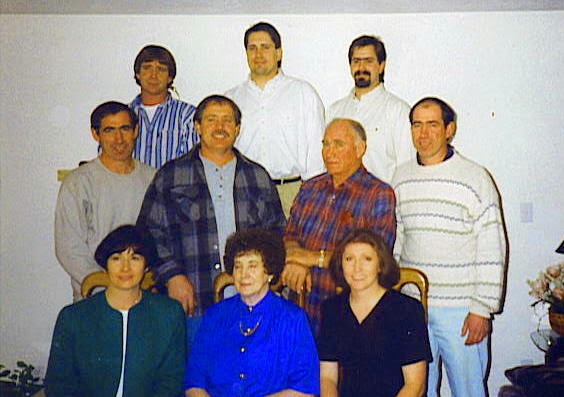
Here’s the funny part. My mom—you know, the oldest—was already pregnant with her first. So four months after my mom gave birth to her first—Corbett—in 1969, Grandma gave birth to her last, Craig. She says, “Four months before I had Craig, we had this little gran
dson who was so adorable. I always wanted to have him out with Eric, so when I went to the hospital four months later and had Craig, I was as lonesome for Corbett as I was for Eric. When I left the hospital, I stopped and picked up Corbett, took him home, and the boys slept clear through the night. It was so fun. Corbett was just like my kid.”

Grandma was done giving birth to children, but she wasn't done raising them. When Craig was in the fourth-grade, she had the opportunity to take in a Native American foster child during the school seasons, through the Indian Placement Program of The Church of Jesus Christ of Latter-day Saints. (The program lasted from 1947 to 2000.)

She took in a boy named Jay Redfox—the same age as Craig and Corbett—who wasn't keen on the program. At first, he’d just “sit there and frown.” The first two words he spoke to Grandma were after she accidentally peeled out in the car, getting onto a paved road from a dirt road. He said, simply, “Old Buzzard peels out too.”* He took a liking to Grandpa, since he had never known his own father, but he’d only call Grandma “Hey You.” At least temporarily.

She says, “Finally, one day I said, ‘I’m not “Hey you.” You either call me Georgia, or you call me mom like the other kids!’ He just frowned at me. He went to school, and one day the phone rang, I picked it up, and Jay said, ‘Mom…’ From then on, he was my very best friend. He didn't want to go to bed; he wanted to stay up until I went to bed. He would stand and help me cook and everything.”

Grandma also took in one more Native American boy, Murray Phillips, who was a half-brother to Jay. She affectionately called them “my Indians.” She loved them as much as any parents do their own children, so when Uncle Jay died in 2012, Grandma took it the hardest. I guarantee no one in Eagle Butte, South Dakota, mourned for Jay as much as Grandma did.
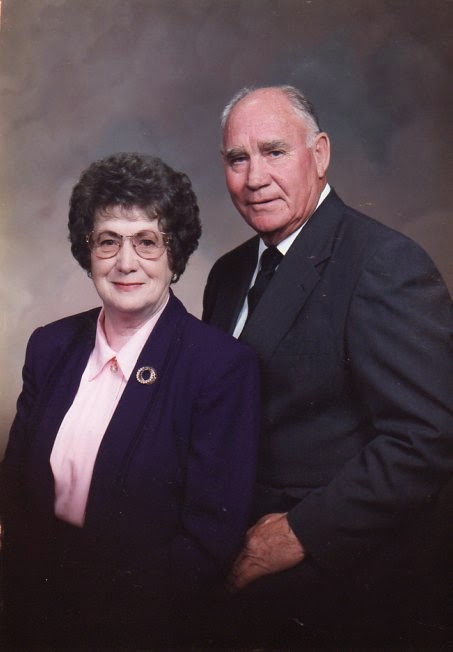
Grandpa died in 2006, and shortly after that Grandma bought a smaller house in Ashton and moved away from “the ranch,” having spent most of her 59 years of marriage in that house. (Eric bought the homestead and now lives there.) To date, she has 40 grandchildren—including Jay and Murray’s children, who not only call her “Grandma” but call her up on the phone regularly. I don’t know how many great-grandchildren she has, but she even has one great-great grandchild—my niece’s daughter, Brooklyn Vega.

She may not receive any official awards in this life for being the greatest grandmother ever, but when that dreaded day comes when she’s called home to her Heavenly Father, there will be no doubt in anyone’s minds on this Earth who takes the crown.


*She actually said, “Old buzzards peel out too,” but I’m guessing there was an old woman on the reservation known (probably not affectionately) as Old Buzzard. 

Tuesday, September 23, 2014

Speaker for the Dead

A few months ago, I listened to Orson Scott Card’s science fiction novel Speaker for the Dead on audiobook. At the conclusion was a recorded post-script by the author, who explained that even though it was the book’s indirect prequel that he’s most known for—Ender’s Game—this was the novel he had always wanted to write. (Both won the prestigious Nebula Award and Hugo Award.)
   
In the sequel, Andrew “Ender” Wiggin devotes his life to being a “speaker for the dead”—someone who is invited to speak at funerals but doesn’t eulogize the deceased. Instead, the Speaker researches the person’s life and speaks the full and honest truth—no matter how painful it is for all in attendance to swallow. It makes him a lot of enemies, but he as well as many others consider his occupation to be a great honor.

Back on June 10, I sat in a patio chair on a back porch with a member of my church congregation so she could talk about losing her son 15 years ago to cancer.

For almost an hour and a half, with a Sony digital recorder on the table and my laptop on my lap, I sat back in silence and let her do almost all the talking. Fifteen years ago, she went through an ordeal every parent dreads—watching her own child suffer and die. Barely a year out of high school in 1997, he was diagnosed with the cancer that eventually killed him over two years later.

Through all the sufferings she endured and through all the miracles she witnessed around the time of his death—and all the times she’s felt his post-mortal presence in the form of a recurring rainbow motif—she’s never written any of these experiences down.

That’s why I was there. She couldn't bring herself to write it down, but she could talk about it. And once she got going, she couldn't stop. Thoughts came flooding into her mind with such ferocity that it frustrated her that she could barely keep up. My follow-up interview with her was a week later—only two days after her late son’s birthday. She talked for almost two hours.

With nearly three and a half hours of recordings, I went to work transcribing. At a rate of five hours transcribing to one hour of recording, factoring in a day job with deadlines and business trips, I hacked away at it until I finished it earlier this month and returned it to her for fact-checking. Her initial embarrassment, believing she sounded incoherent, gave way to excitement and relief that these experiences are now on paper. She even gave me a few referrals—other women in the area who have lost children but haven’t been able to bring themselves to write down the experiences.

One of those women, also in my church congregation, I spoke with over the phone just this afternoon. Not realizing the significance of today—Sept. 23—I called her up but found her emotionally vulnerable rather than her usual boisterous self. Of all days for me to call, it just happens to be the 15th anniversary of the day she buried her own son. (Both of these men died almost a month apart from each other.)

She told me about the miraculous events surrounding her son’s funeral. Instead of a rainbow motif as a sign of her son’s post-mortal presence, it’s the presence of eagles where she sees the little miracles in her life and finds extra needed comfort.

Just like the other woman in my congregation, this woman has never written any of these experiences down.

That’s where I come in. I may not be a “Speaker for the Dead,” but I am a listener. And a recorder. And a transcriber. And a writer.

So I guess you could say I’m pretty close.

Tuesday, September 16, 2014

My Journal Trek

If there's anything about which I can honestly say, “I'm the expert,” it has to be journal writing. When I tell people how many journals I have, the short answer is “more than 40.” The long answer is, well, long.

This is my Journal Trek.

One December evening, when I was three months shy of turning 10 years old, I noticed my mother had been keeping a journal. I don't know where the desire came from—whether it was because I was my mother's son, because I've always loved writing or because I was a kid who wanted what someone else had—but suddenly I wanted one, too. It was late enough at night in a small town that there wasn't a snowball’s chance in Hades I’d be able to buy one anywhere that night. But instead of reassuring that she’d go buy one the next day, she retrieved an extra, unused journal from her room and gave it to me. Fueled by instant gratification, I wrote almost a full page that night for my very first journal entry.

I made the commitment to write in it once a week—every Monday night. As tedious tasks tend to do when you’re a kid, my commitment eventually started eroding away. It became a self-inflicted chore. I would write randomly about things important to me as a kid, such as the latest Nintendo games, losing at whatever, and being picked on in school. Eventually I got so sick of writing that instead of merely quitting I started “cheating”—for several pages, I wrote large letters that covered several lines at a time. It culminated with one page filled with nothing but “Nothing happened. And nothing ever will!”

Because it was an intuitive obligation, I never actually gave it up. After that page, I started taking it a little more seriously. I wrote here and there and confined my writing to one line at a time (as you do). Then in high school, as a sophomore at North Fremont High School in Ashton, Idaho, my journal writing officially became a hobby the night of my first date.

While only a sophomore, I weaseled my way into the Prom by asking a senior—my best friend’s oldest sister. I was fortunate enough to be part of a date group with juniors and seniors I looked up to—two of whom, I had noticed during play practices earlier in the year, were avid journal writers. I took them as examples and decided to make my first date eternally memorable. Prior to leaving for the dance, I sat on my bed and wrote five pages about the day’s excursions—more than I had ever written before in one sitting. That wasn't even the dance itself. When I finished writing about that entire day, it covered eight pages. From then on, entries became pages long because I felt the need to include as many details as possible, even for events more mundane than the Prom.

At least until I became an adult and started learning the meaning of the word “busy.”

While serving an honorable full-time mission for the LDS Church in southern California in the late 1990’s, I became so busy 14 months into my two-year service that I abandoned the longhand journal and took up a tape recorder. I recorded entries night and morning for 10 months—to the day. I resumed writing in longhand journals after returning to Idaho, but it eventually came to a dead halt in March of 2010. Halfway through Journal #40 (which didn't include the longhand journal I kept the first 14 months of my mission), the pain of writing longhand convinced me to use a website called LDSJournal.com. That website tragically died in May of this year by starvation (i.e., lack of advertising).

Since then, Microsoft Word has been my official journal medium, but even that needs an asterisk.

Since adulthood, I've gotten into a vicious cycle of getting behind and catching up. I usually catch up but then get progressively further and further behind. At this point, it has been years since I've been current on my official journal keeping. Every day I write notes in a journal notebook, with the intention I’ll type them up in my official journal; however, as of right now, I've only made it to May of 2013. I also have a hole in the summer of 2009 because I haven’t transferred those notes to a journal yet. I also haven’t finished writing journal notes from about a week of travelling last month.   

And then there's my missionary cassette tapes from the last 10 months of my mission, which I call my “missionary book” (not missionary journal). After being confined to audio form for four years, I took an Oral History course at Brigham Young University in Provo, Utah, and obtained a Sony industrial transcribing machine. With it, over the course of several years, I single-handedly transcribed every single hour I had recorded in 10 months—36 hours on 27 cassettes—and edited, added end notes, proofed, and formatted it in Adobe InDesign. As of right now, it needs to be indexed, proofed one last time, and then published.

So because I don’t have enough writing to do, I’m going to do some “Journal Trekking” on this blog site. Every so often, I’ll publish excerpts from publicly available journals, as well as my own and my paternal grandfather’s journal notes.

What’s your Journal Trek?